

Six years of building a company taught me one lesson I keep coming back to: when I have to choose between attitude and ability, I choose attitude, almost every time.
That's an easy sentence to say and a hard one to live. Early on, I didn't believe it. I thought talent was the whole game. Find the most skilled person, and the team gets stronger. It took me years, and a few painful decisions, to see how wrong that was.
Ability is Loud. Attitude is the Foundation.

We're all quietly trained to hire for ability. The resume, the certificate, the impressive skill. These are easy to see and easy to measure. Nobody hands you a clean framework for attitude, so we default to the thing we can rank on a spreadsheet.
I did exactly that. And I once held on to someone very capable who simply could not fit the way our team works. Why did I keep him? Because his ability was loud, and I told myself the rest would sort itself out.
It didn't. And here's the part I got wrong for a long time: keeping him wasn't kind. It was a quiet kind of torture, for the team, and most of all for him. A talented person in the wrong culture isn't winning. He's grinding against a fit that will never come.
That's the lesson six years pressed into me. A high-ability, wrong-fit person can rarely be developed into a true teammate. But a person with the right attitude (someone who actually shares why we do this), put through a real internal training system, becomes stronger year after year. And they stay.
We don't hire the finished person. We choose the right person, and then we build them.
Why People Development Comes After Results
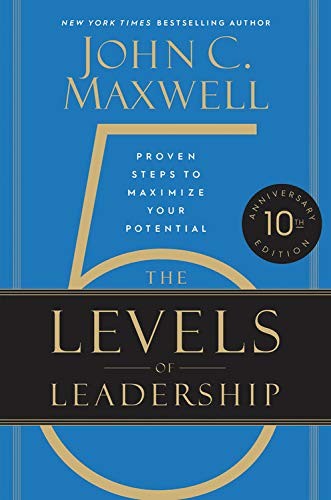
The clearest map I've found for this is John C. Maxwell's The 5 Levels of Leadership. He describes leadership as five levels you climb, one on top of the other:
1. Position. People follow you because they have to. It's the lowest level: leadership by title alone.
2. Permission. People follow you because they want to. This is relationships: they trust you as a person, not a rank.
3. Production. People follow you because of what you've done for the organisation. You produce results. You earn credibility.
4. People Development. People follow you because of what you've done for them. You stop being the one who performs and become the one who grows other leaders.
5. Pinnacle. People follow you because of who you are and what you stand for. Few reach it, and never by chasing it.
Notice the order. People Development sits above Production, not below it. You earn the right to grow people only after you've produced results. You can't skip there with good intentions. Results first; then, and only then, the real work of developing people. We built our culture in that order on purpose.
The Engine: Serve First, Give First

None of those upper levels work without one thing underneath them: the heart to serve. You cannot develop people you secretly want to compete with. So at our HQ, the standard we hold ourselves to is servant leadership, and a principle I keep close from the rooms I sit in: Givers Gain.
Be willing to give first. Help before you're asked. Pour into the people around you before you've worked out what you'll get back.
The reward may not be money, at least not at first. But value always finds its way back to you. I've stopped keeping score on the timeline. I just give, and trust the long game.
Everyone is Born to Lead

Here's what I've come to believe, and what Maxwell says better than I can: leadership is not a talent you're either born with or stuck without. It's a skill. It's learnable. It's reachable, at any age.
Everyone is born able to lead. Most people just never realise they need it, so they never decide to learn it. That's the whole gap. Not talent. A decision.
If you want to go deeper, read The 5 Levels of Leadership, and keep The 21 Irrefutable Laws of Leadership right beside it. I'd put both in the hands of any leader, at any stage.
Leadership isn't who you were born as. It's who you decide to become.