Watch What They Do, Not What They Say
People can't tell you what they need. They answer from what they already know. The truth is rarely in what they say. It is in what they actually do.


For a long time I built exactly what people asked for.
They asked for more class times, so I added more class times. They asked for a cheaper option, so I made a cheaper option. They asked for more variety on the floor, so we put more variety on the floor. I was listening. I was responsive. I gave people the thing they said they wanted.
Most of it changed nothing. The honest version is that I spent years answering the wrong question and calling it customer focus.
We Trust the Survey More Than the Struggle
There is a convention almost every business inherits without questioning it. You want to understand your customer, so you ask them. What do you want. What would make you join. What features matter most. Then you build the top of the list.
The problem is buried in the question itself. When you ask people what they want, they answer from what they already know exists. They optimise the past. They hand you a slightly better version of the thing in front of them, because that is the only thing they can picture.
A survey makes you feel like you are listening. Often you are just collecting the customer's best guess and treating it as a brief.
People Describe Symptoms, Not Diagnoses
Henry Ford put the first affordable car in the world's driveways. The line that has followed him ever since says it best: if he had asked people what they wanted, they would have said a faster horse. Not a car. A faster horse. The horse was the only thing they had ever ridden, so it was the only future they could picture.
People don't know what they want until you show it to them.
Steve Jobs said that decades later, and built one of the most valuable companies on earth around it. Two men, a century apart, in completely different trades, understood the same quiet thing: ask people what they want and they will hand you the past.
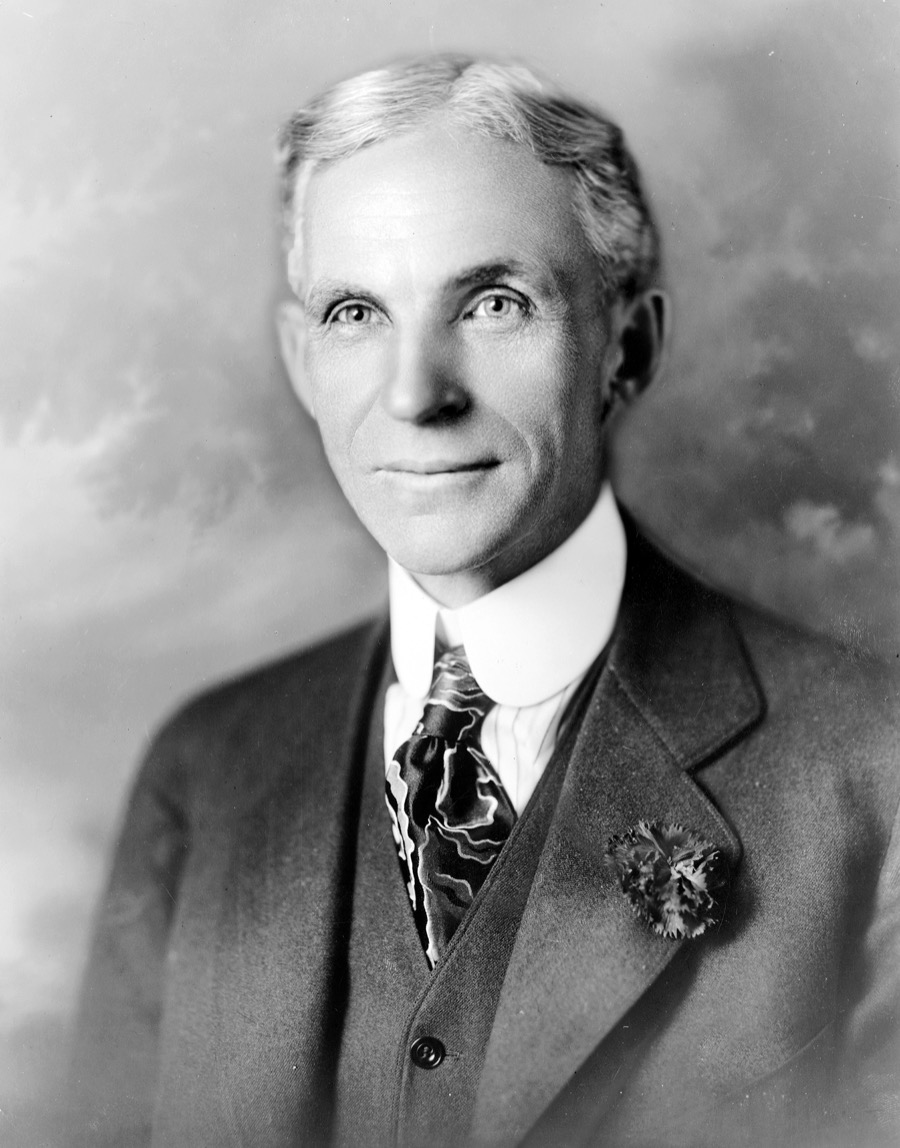

Ford portrait: public domain. Steve Jobs photo: Matthew Yohe, CC BY-SA 3.0.
Nobody dreams in solutions they have never seen. They give you the symptom and trust you to find the cause. "I want more clients." The real need is predictable revenue and a quiet mind. "I want a better workout plan." The real need is to feel in control of their own body again.
If you take those answers literally, you build a faster horse. More ads. A fancier spreadsheet. All responsive. All beside the point.
So I stopped asking people what they want. I started watching what they endure. The question changes shape:
Not: how committed are you?
Instead: tell me how a normal day actually goes for you.
Not: what is your fitness goal?
Instead: what have you tried before, and why did it stop?
Not: what would make you join?
Instead: what has kept you from joining anywhere until now?
You are not collecting a wish list. You are mining for friction, frustration, and the small workarounds people have quietly built to survive a problem they no longer even notice. That is where the real need lives. Unspoken, and usually invisible to the person living inside it.
At Fitcom, We Sell the Thing They Can't Name Yet
Our coaches are not really selling training. They are solving a problem the client cannot fully put into words.
Someone says they want to lose weight. Underneath it, they want to stop feeling invisible. Someone says they want to get stronger. Underneath it, they want to feel like they are finally doing something right. Someone says they want accountability. Underneath it, they want a person who will not let them be their own worst enemy.
None of them will say that to you on day one. Most of them have not said it to themselves. The work is to see the need before the client can name it, and then walk with them toward it, patiently, without rushing them. We are in the business of people, not the business of fitness.
The Takeaway
Here is what I came to, after years of dutifully building faster horses.
What a person asks for is the symptom they can see. What they actually do, day after day, is the truth they will never say out loud. One is noise. The other is the signal.
Don't ask what they want. Watch what they do.